Frequently Asked Refrigerant Questions
Refrigerant is the specialized fluid inside your air conditioner that absorbs heat from your home’s air and carries it outside. It doesn’t create cold air. It moves heat out. Without the right amount of refrigerant circulating through a sealed system, your AC can run for hours and never bring your house down to temperature.
If you own a home in Alexandria, Springfield, or anywhere in Northern Virginia, refrigerant matters more right now than it has in decades. Federal rules changed on January 1, 2025, and the refrigerant in your current system may no longer be manufactured. Here’s what that means for you.
How Does the Refrigerant Cycle Work?
Refrigerant works because of two useful properties: it stays liquid at temperatures far below water’s freezing point, and it boils below room temperature. That lets it flip between liquid and gas over and over, absorbing and releasing heat each time.
The cycle runs in five steps:
- Compression. Gaseous refrigerant enters the compressor, which raises its pressure and temperature.
- Condensation. The hot gas moves through the condenser coils in your outdoor unit, dumping heat into the outside air and returning to a high-pressure liquid.
- Expansion. The liquid passes through an expansion valve, which drops its pressure sharply.
- Evaporation. In the indoor evaporator coils, the refrigerant boils back into a gas, pulling heat out of the air around it. A blower fan pushes that chilled air into your ductwork.
- Return. The gas cycles back to the compressor and it starts again.
This all happens inside a closed loop. Your AC is not supposed to consume refrigerant the way a car consumes gas. If your system is low, you have a leak.
What Types of Refrigerant are Used in Your Home’s AC System?
Three refrigerants cover almost every residential system in Northern Virginia, and knowing which one you have tells you a lot about what your next repair will cost.
R-22, sold under the brand name Freon, was the standard for decades and is found in systems installed before roughly 2010. It has been banned from production and import in the U.S. since 2020, so any R-22 added to your system today comes from reclaimed stock at a premium price. Its global warming potential is around 1,810.
R-410A, often called Puron, replaced R-22 and appears in most systems installed between about 2010 and 2024. Manufacturers stopped producing new R-410A residential equipment after December 31, 2024, but it is still perfectly legal to service an existing R-410A system. Supply will tighten over the coming years, and prices will follow. Its GWP is roughly 2,088.
R-454B and R-32 are the current standard, used in equipment manufactured in 2025 and later. Both are classified as A2L refrigerants, and both carry dramatically lower global warming potential than what came before: about 466 for R-454B and 675 for R-32.
That last number is the whole reason for the change. Global warming potential, or GWP, measures how much a gas contributes to warming compared to an equal amount of carbon dioxide. Moving from R-410A to R-454B cuts that impact by close to 80 percent, which is what federal regulators were after.
What Refrigerant Changes Happened in 2025?
The American Innovation and Manufacturing (AIM) Act, signed in December 2020, directed the EPA to phase down hydrofluorocarbons. For homeowners, the practical effects are:
- Manufacturers stopped producing R-410A residential systems after December 31, 2024.
- New systems now ship with lower-GWP A2L refrigerants, most commonly R-454B or R-32.
- Contractors could install remaining pre-2025 R-410A split-system inventory through December 31, 2025, so a system installed in early 2025 may still be R-410A.
A2L refrigerants are classified as mildly flammable, which is why they require updated equipment, leak detection, and technician training. They are safe when installed and serviced correctly, and they are not interchangeable with R-410A. You cannot drop a new refrigerant into an old system.
Is My AC Using a Refrigerant That’s Being Phased Out?
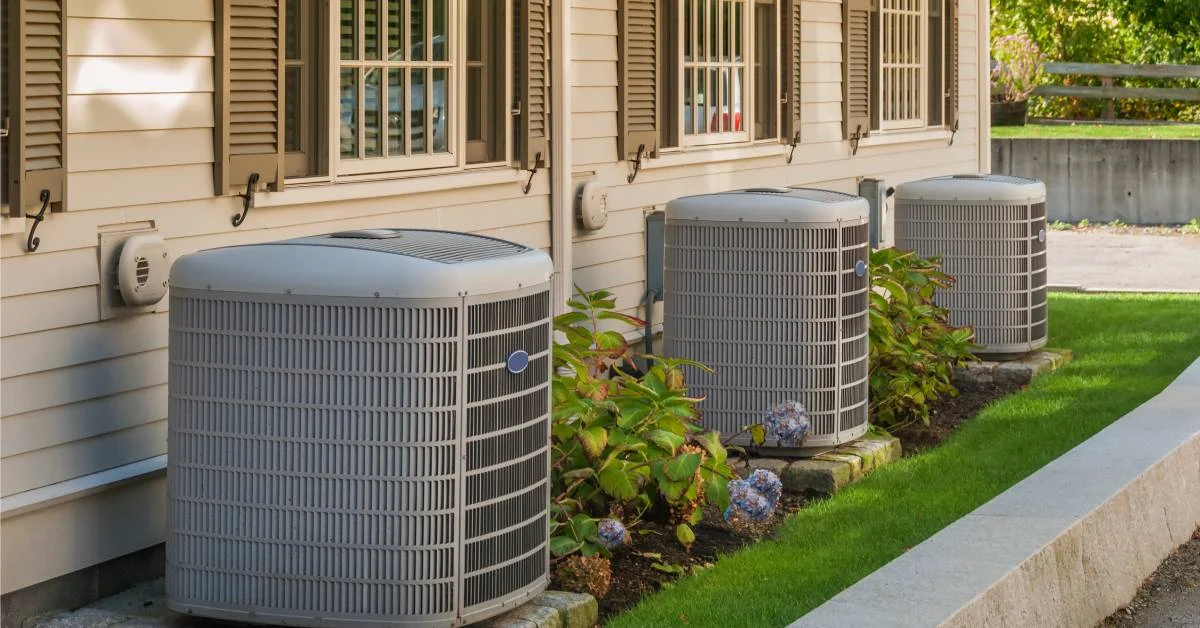
Check the nameplate on your outdoor condenser unit. It lists the refrigerant type directly. As a rough guide:
- Installed before 2010: likely R-22. Servicing it means paying for reclaimed refrigerant at a premium, if it’s available at all.
- Installed 2010 to 2024: likely R-410A. Still serviceable, but supply will tighten and prices will climb over the system’s remaining life.
- Installed 2025 or later: likely R-454B or R-32.
If you’re running an R-22 system with a leak, repair is usually throwing money at a system that’s already past its expected lifespan. Our guide on whether to repair or replace your AC walks through the math.
What Are the Signs of a Refrigerant Leak?
Call a professional if you notice:
- Air from the vents that’s cool but not cold
- The system running constantly without reaching the thermostat setting
- Ice or frost on the evaporator coil or refrigerant lines
- A hissing or bubbling sound near the indoor unit
- Energy bills climbing with no change in how you use the AC
- Higher indoor humidity than usual
A leak doesn’t just hurt comfort. Running low on refrigerant makes the compressor work harder, and a failed compressor is one of the most expensive repairs on the system.
Refrigerant Service in Alexandria and Northern Virginia
Oasis Heating, A/C & Refrigeration has served Alexandria, Springfield, Lorton, Fairfax, and Arlington since 1998. Our EPA-certified technicians handle leak detection, refrigerant recharges, and full system replacement on all makes and models, with 24-hour emergency service and free estimates on new equipment.
Call or request an estimate online to schedule refrigerant service.